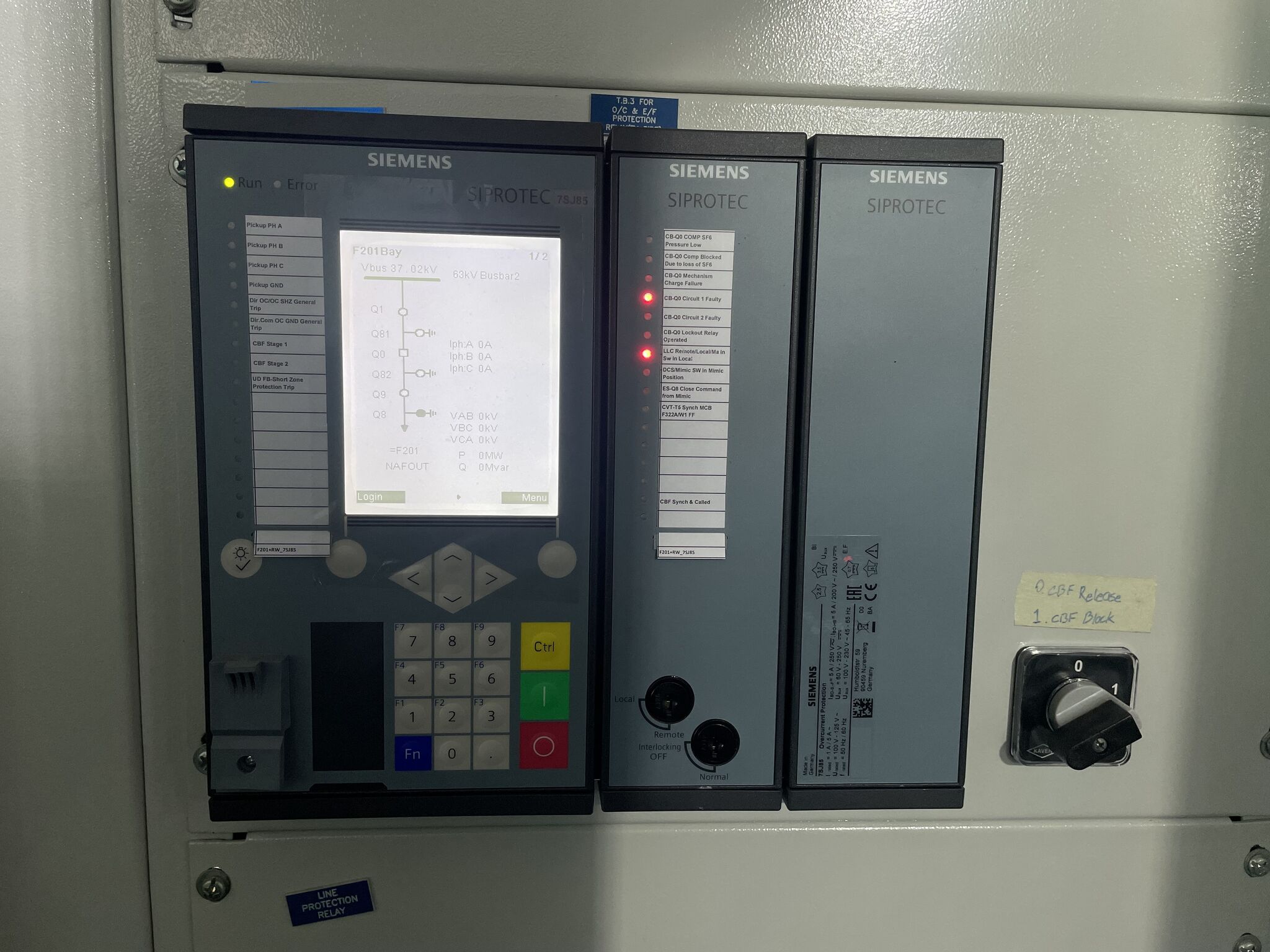


Protection relays ensure safe operation, prevent equipment damage, and maintain grid stability.
Generator Electrical Protection ⚡
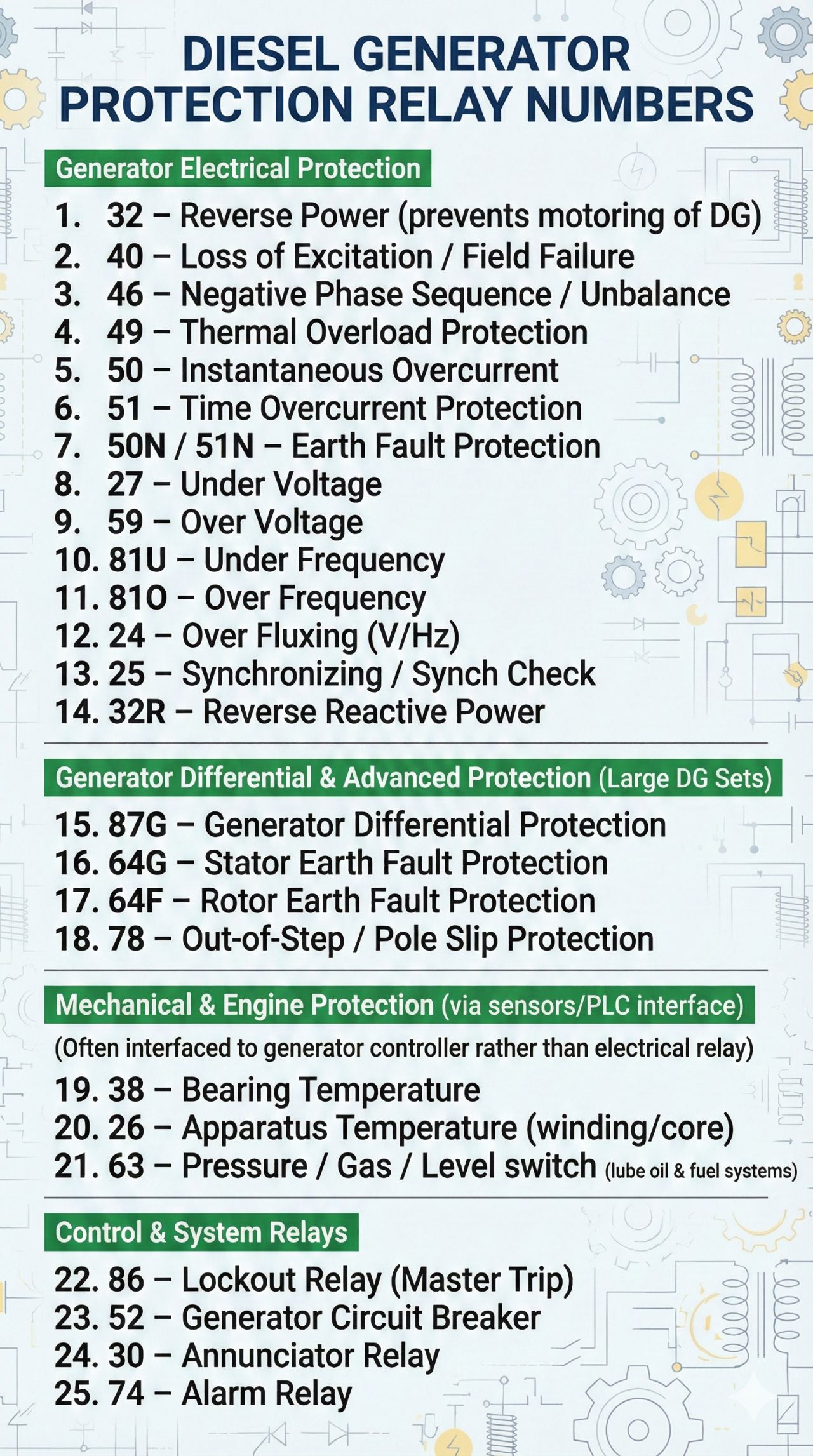
1. 32 – Reverse Power: Trips when generator starts consuming power (motoring) due to prime mover failure.
2. 40 – Loss of Excitation: Detects field failure to prevent instability & overheating.
3. 46 – Negative Phase Sequence: Protects against unbalanced loads causing rotor heating.
4. 49 – Thermal Overload: Prevents insulation damage from overheating.
5. 50 – Instantaneous Overcurrent: Trips during severe faults (short circuit).
6. 51 – Time Overcurrent: Backup protection for sustained overloads.
7. 50N/51N – Earth Fault: Detects leakage current to ground.
8. 27 – Under Voltage: Trips during severe voltage drop.
9. 59 – Over Voltage: Protects insulation from over-stress.
10. 81U – Under Frequency: Indicates overload or engine speed drop.
11. 81O – Over Frequency: Prevents overspeed damage.
12. 24 – Over Fluxing (V/Hz): Protects against core saturation & overheating.
13. 25 – Synchronizing Check: Ensures voltage, frequency & phase match before paralleling.
14. 32R – Reverse Reactive Power: Detects excitation system abnormality.
Differential & Advanced Protection (Large DG Sets) 🛡️
15. 87G – Differential Protection: Detects internal stator faults.
16. 64G – Stator Earth Fault: Identifies insulation failure in stator winding.
17. 64F – Rotor Earth Fault: Protects rotor field circuit.
18. 78 – Pole Slip / Out-of-Step: Prevents instability during grid disturbances.
Mechanical & Engine Protection 🔧
19. 38 – Bearing Temperature: Prevents bearing seizure.
20. 26 – Winding/Core Temperature: Detects overheating of generator parts.
21. 63 – Pressure/Level Switch: Monitors lube oil & fuel system health.
Control & System Relays 🎛️
22. 86 – Lockout Relay: Master trip; requires manual reset after major fault.
23. 52 – Generator Circuit Breaker: Connects/disconnects DG from bus.
24. 30 – Annunciat or Relay: Alarm & fault indication system.
25. 74 – Alarm Relay: Initiates warnings before trip conditions.
Why These Protections Matter ✅
• Prevent catastrophic failures & fire hazards
• Ensure reliable emergency power supply
• Protect windings, insulation & engine components
• Maintain safe synchronization with grid systems
• Reduce downtime & maintenance costs