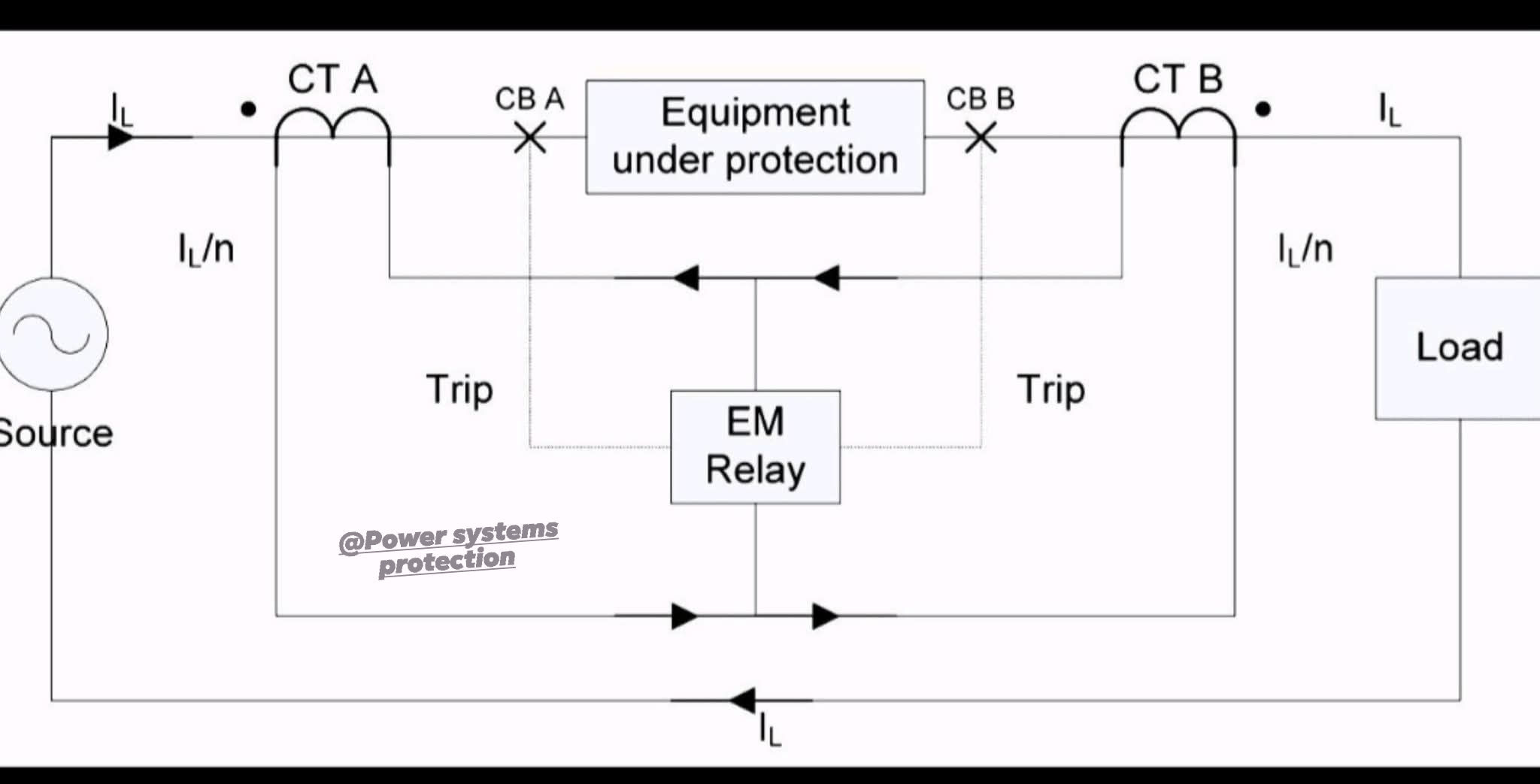


Differential protection is a protective relay scheme used primarily in electrical systems to detect and isolate faults. It operates by comparing the current entering and leaving a specific piece of equipment, such as a transformer, generator, or motor. Here’s how it works:
1. Current Measurement:
The system measures the current at both the input and output terminals of the equipment.
2. Comparison:
It continuously compares these two sets of current values. Under normal conditions, the currents should be equal (or very close to equal).
3. Fault Detection:
If a fault occurs (like a short circuit or ground fault) within the protected equipment, the current entering and leaving will differ. This difference triggers the protection system.
4. Trip Signal:
When a significant difference (known as the differential current) is detected, the relay sends a trip signal to circuit breakers, isolating the faulty equipment from the rest of the system.
Advantages of Differential Protection:
• Sensitivity:
It can detect small differential currents, making it effective for identifying faults.
• Speed:
The system can operate quickly to isolate faults, minimizing damage.
• Selectivity:
It can specifically target faults in the protected equipment without affecting the broader network.
● Applications:
- Transformers
- Generators
- Motors
- Busbars
Differential protection is essential for maintaining the reliability and safety of electrical systems.