


Directional_Earth_Fault_Relay_67N
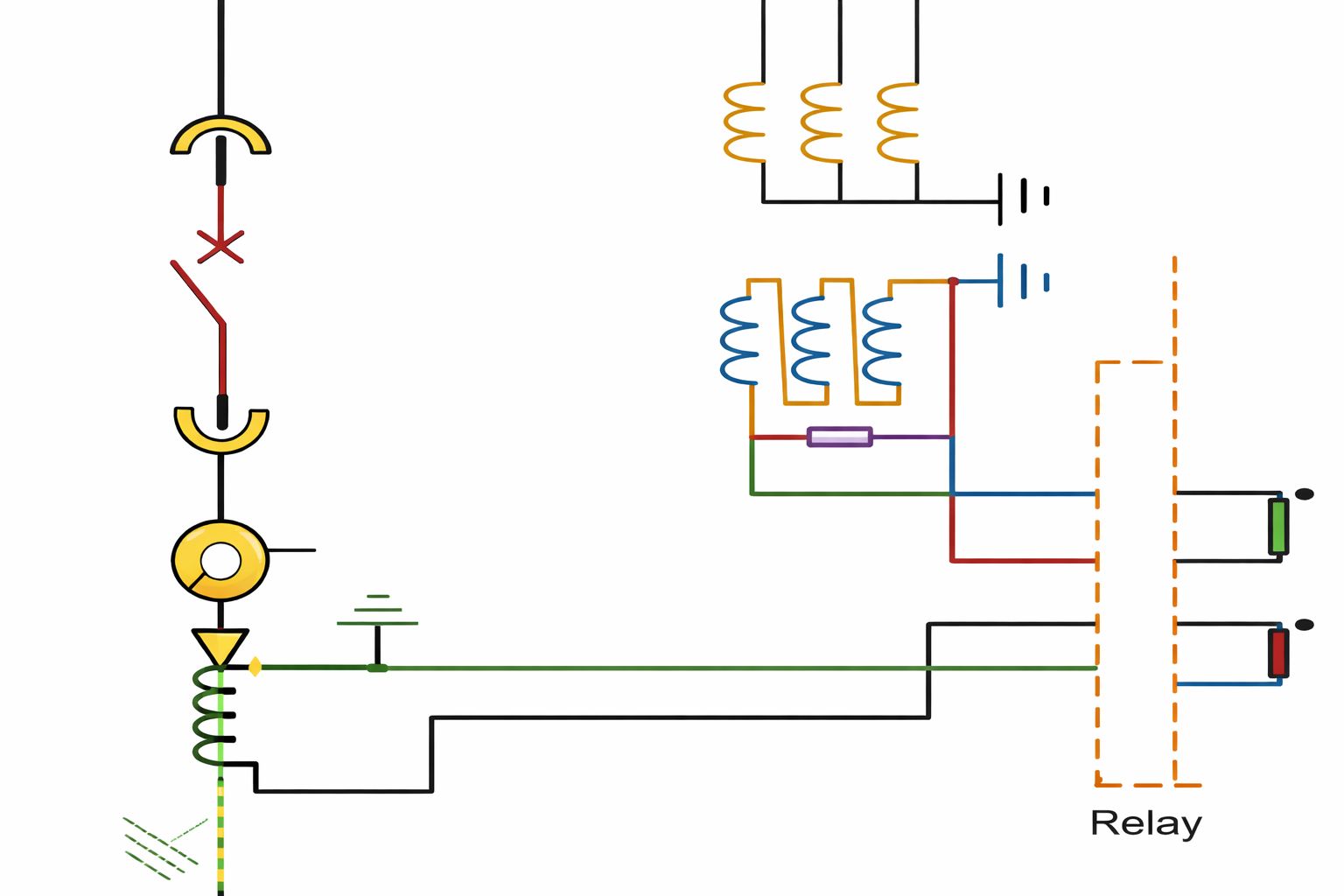
Residual (earth-fault) current can be measured either by a core-balance current transformer or by the residual summation of the phase current signals, while the residual voltage is obtained using a voltage transformer with a broken-delta connection.
In networks where the neutral is isolated or earthed through a high impedance, earth-fault currents are limited; therefore, the use of a core-balance current transformer is recommended for reliable earth-fault protection.
To prevent ferroresonance (nonlinear resonance) and the associated overvoltages, a resistor is typically connected across the broken-delta secondary circuit.
The directional earth-fault protection function (67N) operates by comparing the earth-fault current phasor with a polarizing voltage phasor. One of the key settings for this function is the relay characteristic angle (RCA), which is defined as the angle between the maximum torque line and the polarizing quantity. The RCA determines the orientation of the directional characteristic and can be set within a range of −179° to +180°.
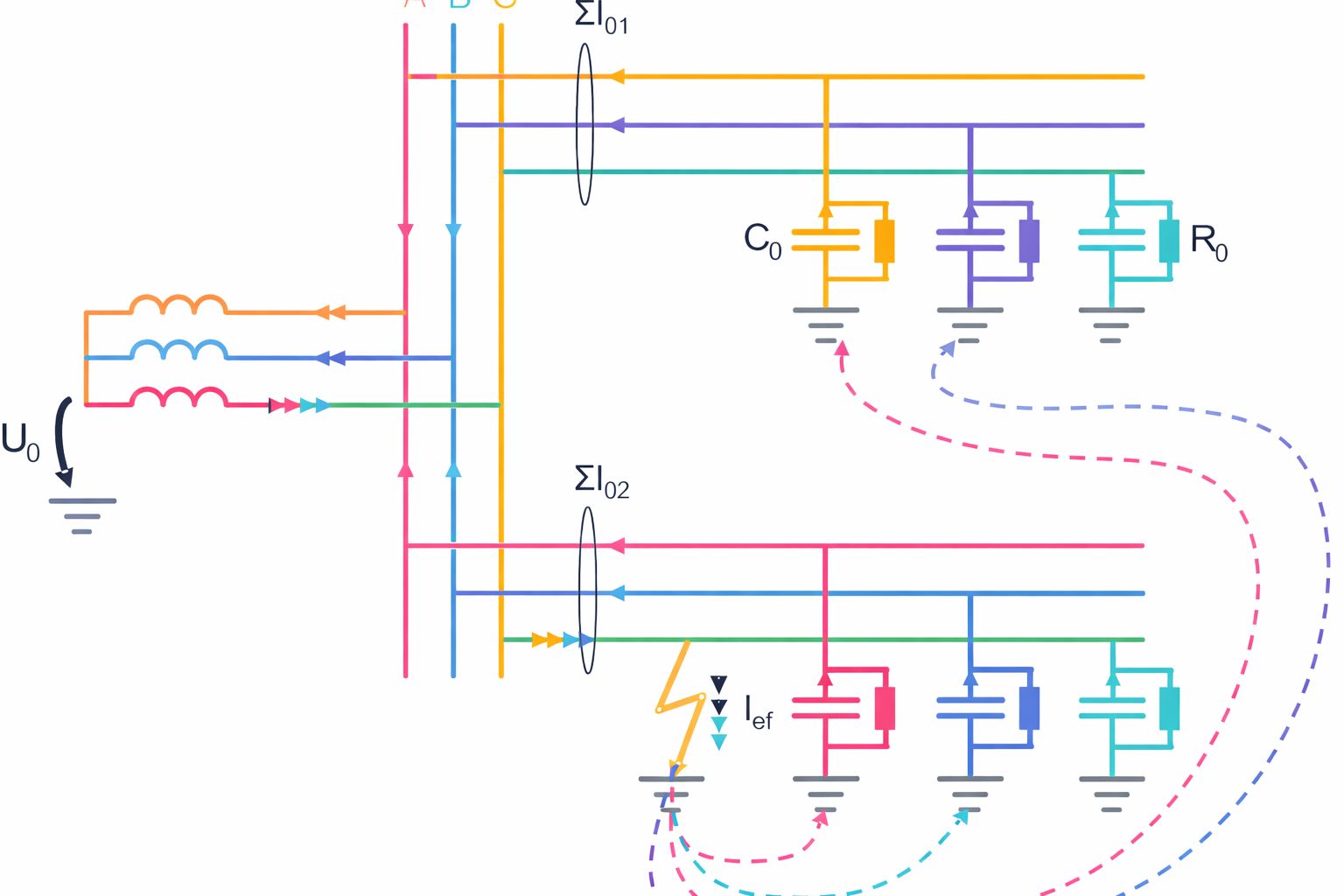
* In isolated networks (as shown in the second figure), the residual current is predominantly capacitive and leads the polarizing voltage by approximately 90°. RCA is typically set to −90° (leading).
* When the neutral is earthed through a low resistance, the RCA can be set to 0°.
* In solidly earthed networks, the RCA is commonly set to +60° (lagging).