

Within high-voltage transmission and distribution systems, accurate measurement and protection are crucial. Both VTs and CVTs play essential roles in achieving these objectives, but their underlying technologies and applications differ.
● Operating Principle:
• VT: Employs a traditional electromagnetic transformer design. The primary winding receives the high voltage, inducing a proportional, lower voltage in the secondary winding for safe measurement by instruments and protective relays.
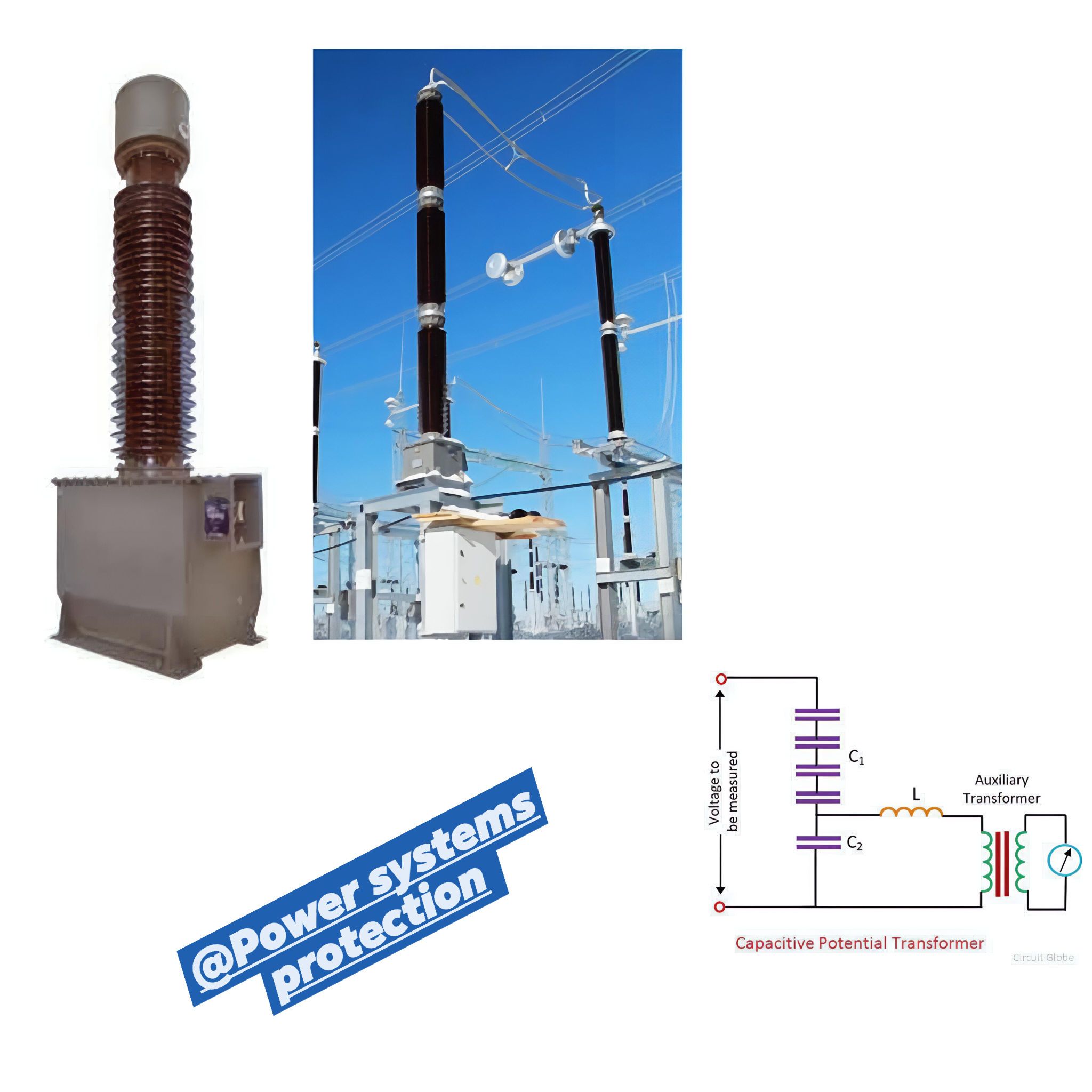
• CVT: Utilizes a combination of capacitive voltage division and an electromagnetic transformer. The capacitive divider initially reduces the high voltage, followed by further step-down by the electromagnetic transformer. This approach offers greater stability and accuracy compared to a pure VT design.
● Applications:
• VT: Primarily used for voltage measurement and protection in lower voltage level systems (typically up to 132 kV) due to their compact size and cost-effectiveness.
• CVT: Employed for voltage measurement, protection, and potentially carrier communication in higher voltage level systems (typically above 132 kV). Their enhanced accuracy and stability are advantageous at these elevated voltage levels. Additionally, CVTs can integrate carrier communication channels for supervisory control and data acquisition (SCADA) systems.
● Considerations:
• Selection between VT and CVT depends on the specific voltage level and desired functionalities within the power system.
• VTs offer a simpler and more economical solution for lower voltage applications.
• CVTs provide superior performance in terms of accuracy, stability, and potential for additional functionalities like carrier communication, making them the preferred choice for high voltage applications.
In essence, VTs represent a mature and cost-effective technology for voltage measurement and protection at lower voltage levels. CVTs, on the other hand, provide a more advanced solution with superior accuracy, stability, and potential for broader functionalities in high voltage environments.
• The difference in shapes as shown in pic below.