


As core nodes in power grid operation, the safe and stable operation of substations directly affects the electricity supply to countless households. The traditional manual inspection model for substations is inefficient and responds slowly to faults, making it increasingly unable to meet the intelligent requirements of the new power system.
MicroSCADA (Supervisory Control and Data Acquisition, also known as monitoring and control and data acquisition) substation monitoring systems are computer-based DCS and power automation monitoring systems. Designed as an integrated intelligent monitoring platform for medium-and low-voltage substations, they integrate cutting-edge technologies such as the Internet of Things, edge computing, and big data analytics to enable real-time collection, intelligent analysis, and remote control of operational data across all scenarios at substations. These systems replace traditional manual monitoring and support substations in achieving unmanned and intelligent transformation.
Compared with traditional monitoring systems, MicroSCADA employs a lightweight architectural design that meets the functional requirements of small and medium-sized substations while avoiding the redundancy and complex configuration challenges associated with large-scale systems. It offers lower deployment costs and greater adaptability, making it the preferred solution for the retrofitting of existing substations and the construction of new smart substations.
Its range of applications is also extremely broad:
Substation automation monitoring systems at various voltage levels
Electrical monitoring systems for data centers, airports, chip fabs, and similar facilities
Power supply monitoring systems for petroleum, petrochemical, papermaking, and other enterprises
Monitoring systems for wind farms, photovoltaic power generation, and other applications

Today, we will take you through our MicroSCADA substation monitoring system and explore how this "power steward" ensures the safe and reliable operation of substations.
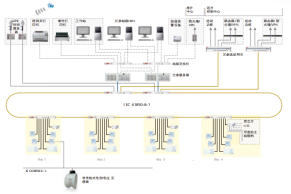
Core functionality: Covers the full range of scenario-based control and management requirements for substations
The Six Core Functional Modules of the MicroSCADA System
1. Real-time collection of full-scale data
MicroSCADA supports the integration of over a hundred categories of operational data, including voltage and current, switch status, equipment temperature, ambient temperature and humidity, and SF₆ gas concentration; it is compatible with mainstream power communication protocols such as IEC 101, IEC 104, and Modbus; and can interface with a wide range of equipment, including protection devices, measurement and control units, and intelligent sensors. With a data acquisition latency of less than 1 second, it enables "single-screen awareness" of the entire station's operating status.
2. Remote Control and Operation
Operations and maintenance personnel do not need to travel to the site; they can perform routine operations—such as switching the circuit breaker on and off, adjusting the position selector, and resetting the device—directly from the monitoring center. The system incorporates multiple anti-misoperation interlock mechanisms, effectively mitigating the risk of operational errors and increasing response time by more than 80% under extreme weather conditions or during emergency fault scenarios.
3. Intelligent Alerting and Fault Localization
Addressing the drawbacks of traditional "overly aggressive alerting," the system uses intelligent algorithms to hierarchically filter and correlate alert information, rapidly pinpointing fault locations and causes; it then delivers alert notifications through multiple channels—including pop-up windows, audio and visual cues, and SMS—enabling operations and maintenance personnel to address anomalies immediately and reducing fault diagnosis time from the hour scale to the minute scale.
4. Enable automatic report generation
Automatically generate various operational reports, including voltage compliance rates, equipment operation counts, and electricity consumption statistics; support Excel export and custom queries; eliminate the tedious tasks of manual meter reading and data compilation; increase report generation efficiency by 90%; and facilitate the digital transformation of O&M management.
5. Full Life Cycle Management of Equipment
Integrate equipment inventory records with real-time tracking of equipment operating duration, number of operations, and defect records; use operational data to predict equipment health status and issue maintenance alerts in advance; help operations and maintenance teams shift from "reactive emergency repairs" to "proactive maintenance"; and reduce the likelihood of unexpected equipment failures.
6. Multi-terminal access adaptation
It supports synchronized access via a PC-based monitoring dashboard and a mobile app, enabling operations personnel to monitor the operating status of substations and receive alarm notifications anytime and anywhere; even during off-site inspections, they can promptly respond to anomalies within the substation, thereby overcoming the constraints of time and location.
Product Advantages: Why Choose MicroSCADA?
1. Lightweight and flexible, with strong adaptability
Optimized for medium-and low-voltage substation applications, the solution can be deployed independently as a standalone system or integrated with higher-level dispatching systems; it also supports flexible expansion from a few busbars to several dozen busbars, making it suitable for diverse application scenarios, including substations, switchgear stations, and distribution substations.
2. Stable and reliable, with safety protection
The system undergoes safety testing within the power industry and employs a multi-layered protection mechanism comprising physical isolation, permission-based access control, and data encryption; its core modules feature a redundant design, providing an average annual mean uptime exceeding 50,000 hours and ensuring uninterrupted grid monitoring.
3. Easy to deploy and maintain
With standardized modules and visualized configuration, a new substation can be deployed within one week; existing facilities can be retrofitted using current hardware equipment, halving the deployment cycle; and subsequent system upgrades and functional extensions require no complex modifications, thereby reducing long-term O&M costs.
4. Localized Service Support
We have a professional R&D and service team specializing in the power industry. From solution design and on-site commissioning to subsequent operation and maintenance, we provide end-to-end one-on-one services, respond swiftly to customer needs, and resolve various issues encountered during operation.
Field implementation: already ensuring the stable operation of hundreds of substations
At present, our MicroSCADA substation monitoring system has been widely deployed in a variety of applications, including captive power plants for industrial enterprises, urban distribution network substations, and new-energy step-up substations; it has served more than 100,000 customers in total and has operated reliably for over 40 years. In a 110 kV substation retrofit project at a certain industrial park, the application of our system enabled the substation to operate unattended, resulting in annual labor cost savings of nearly 400,000 yuan and a reduction in fault response time from 2 hours to 15 minutes, earning high recognition from the customer.
Amid the wave of intelligent transformation in the power sector, the intelligent upgrading of substations is an inevitable trend.
The ABB MicroSCADA substation monitoring system is built around the principles of being "lightweight, intelligent, reliable, and easy to use," providing cost-effective intelligent monitoring solutions for small and medium-sized substations.